| |
| Tuesday, 27 October 2026 |
| 18th Century England through the Eyes of Canaletto |
| Nick Salmond |
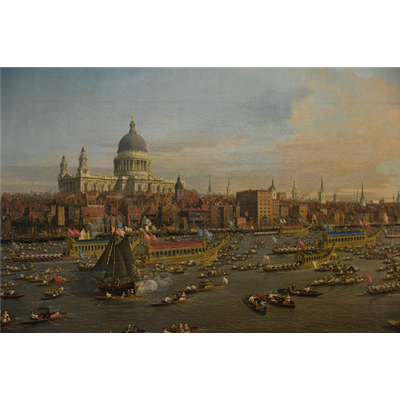 |
18th Century England through the eyes of Canaletto The great Venetian artist Canaletto spent ten years living in London producing wonderful landscapes of the city and its surrounds. In this lecture, we explore his time in the capital and look at how his style changed during his long visit. We look at some of the work he produced and explore how the views he captured have changed over the centuries. Nick Salmond Nick is a London Blue Badge Guide and a lecturer in History and the Arts. He qualified as a London Blue Badge Guide in 2019, winning the award as Guide of the Year. In 2021 he gave the annual Katrine Prince Lecture to members of the Institute of Tourist Guiding. Before guiding he joined the BBC where he worked for over 30 years in both television and radio. He helped cover some of the great events of History, from the fall of the Berlin Wall to the terrible events of 9/11, from the fall of the Thatcher Government to the celebrations of the Queen’s Diamond Jubilee. |
|
| Tuesday, 10 November 2026 |
| SPECIAL INTEREST DAY - Blenheim Palace and the Power and Glory of our Country Houses |
| Anthony Russell |
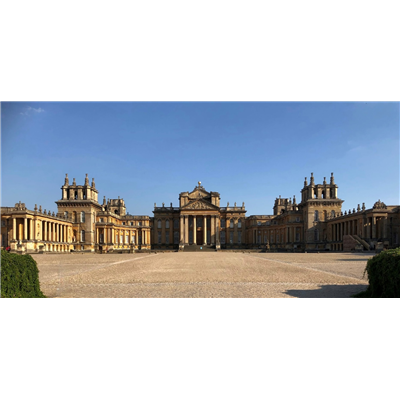 |
Blenheim Palace and the Power and Glory of Our Country Houses The Power and Glory of Our Country Houses - their Evolution and Changing Role It is often argued that Britain possesses the finest collection of ‘living’ stately homes in the world. It is harder to deny that they represent one of the country's greatest assets and its greatest contribution to the decorative arts worldwide. This lecture goes back in time to explain their origins in British history, the changing nature of society and the way country houses have evolved. This journey through their history illustrates the most magnificent examples in all their grandeur and beauty, while considering the impact they have had on society and its development. Consideration is given to changing roles and if they can still exert a powerful hold on society. Blenheim Palace - the Agony and the Ecstasy Possibly the most admired historic English building outside London, Blenheim Palace is an uncompromising World Heritage monument to English military ambition and one family's self importance. The story of its construction is a fascinating catalogue of excess and outrage, while the result is both monstrous and utterly sublime. But it is in the effect that its perceived spirit has had on consecutive generations of Marlboroughs, that is most revealing. It is also of course, from within this 'cauldron' that a Churchill was born, recently voted the ‘The Greatest Briton of All Time’ Anthony Russell As a cultural historian, writer and artist Anthony Russell has travelled much of the world. Lecturing originally to American university students on bespoke tours of Europe, he has lectured for the Arts Society since 2010. He spent six years as a consultant for Luke Hughes advising on the furniture needs of prestigious buildings throughout Britain, including museums, palaces, and cathedrals. At the British Museum, where for many years he ran outreach events and hosted visiting lecturers, he has been described as "Hugh Grant meets the Dalai Lama.” Committed to the 'search for civilisation' and as an advocate of nonviolence, he is the founder of The Chandos; supporting causes that promote understanding and cooperation, is on the committee for Uniting for Peace and a contributor to the All-Party Parliamentary Group on Democracy in Burma. He is author of the book ‘Evolving the Spirit - From Democracy to Peace' commended by Aung San Suu Kyi, the Nobel Peace Laureate, as meaning a great deal to her. He was also Founder of the Brockley Festival of Ideas and a Founding Advocate of CIVIL-ISATION. He is currently undertaking research for a new book on civilisation; what it is, whether we have it & how you get it. |
|
| Tuesday, 24 November 2026 |
| The Queen of Sheba - Empress or Enigma? |
| Christopher Bradley |
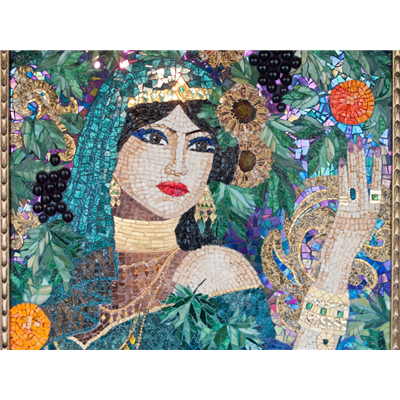 |
The Queen of Sheba – Empress or Enigma She is one of the most intriguing and exotic figures in history. Three thousand years ago the Queen of Sheba travelled with a caravan of hundreds of camels, laden with unimaginable riches, through the Arabian deserts to meet King Solomon in Jerusalem. Their coming together is detailed in the wonderful Arezzo frescoes by Piero della Francesca. It is also one of the world’s oldest love stories, as told by poets and artists in Ethiopian and Arabian folklore. Freed from historical constraints, the imaginations of classical artists have run wild with fabulous palaces and surreal landscapes. Finally, we look at the real evidence of the Kingdom of Sheba, the ruins of its capital Marib and see what the queen might really have looked like - and it isn’t Gina Lollobrigida! Christopher Bradley Expert in the history and culture of the Middle East and North Africa. As a professional tour guide and lecturer he has led groups throughout the Middle East and Asia. He writes extensively on Arabia and is the author of the Insight Guide to the Silk Road and Berlitz Guides to Cairo; Abu Dhabi, Nile Cruising, Libya; the Red Sea; Oman and the Discovery Guide to Yemen. As a photographer he has pictures represented by several photographic libraries. As a film producer and cameraman he made documentaries for the BBC, National Geographic TV and Channel 4 |
|
| Tuesday, 08 December 2026 |
| Wonder Workers and The Art of Illusion |
| Bertie Pearce |
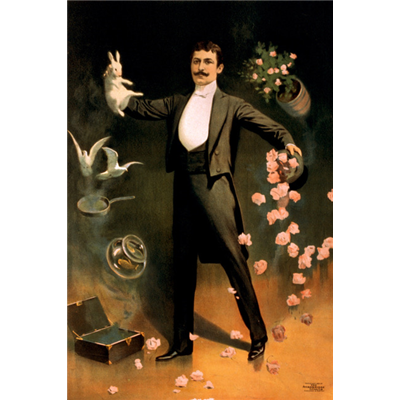 |
Wonder Workers and the Art of Illusion From the beginning of time the fascination with magic and the impossible has been widespread. Egypt was the cradle of magic. Sorcerer Priests used scientific principles to create illusions for the edification of worship and to hold power over the people.Then there is the age-old skill of sleight of hand, which proves that ‘the hand is quicker than the eye’. Magicians were known as ‘Jongleurs’ lest they be sentenced to death for ‘witchcraft and conjuration’ under the edicts of Henry VIII. With the emergence of the Music Hall, Magic gained a new respectability and audiences flocked in their thousands to watch the extraordinary feats of The Great Illusionists. This gave birth to legendary tricks such as pulling a rabbit from a hat and sawing a lady in half. And if magicians guarded their secrets with their lives, how was the Magic Circle formed ? – Home to 10,000 secrets. Even today in our super technical age of ipods and broadband, the wonder and surprise of magic are as popular as ever, not forgetting the Harry Potter craze. This lecture is a whistle stop tour of the history of mystery from 3000 BC to the 21st century and be careful! – you might be amazed and bewitched. Bertie Pearce Has a BA (Hons) in Drama from Manchester University, and a Diploma Internationale from the École Internationale du Théatre, Jacques Lecoq. A member of the Inner Magic Circle, with Gold Star. Past experience includes lecturing and performing on cruise ships, and to U3A, historical societies, festivals, schools and colleges. Has toured the world with a magic cabaret show and a one man show entitled All Aboard. Has written articles for newspapers and magazines on entertainment and theatre. |
|
| Tuesday, 26 January 2027 |
| Threads of History: The World of the Bayeux Tapestry |
| Rupert Willoughby |
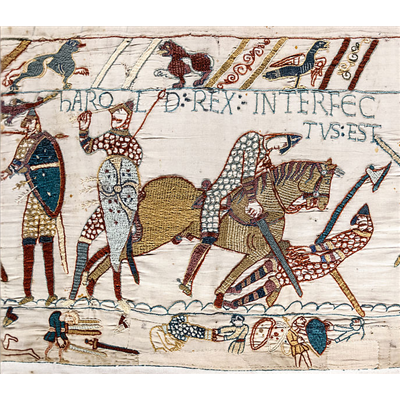 |
Threads of History: The World of the Bayeux Tapestry Commissioned by the Bishop of Bayeux who fought at Hastings, executed by skilled English craftsmen, the Bayeux Tapestry is the last survivor of a vanished art form. Rupert Willoughby presents a lively introduction to the tapestry – so much more than the story of Hastings – in which he unravels some of its mysteries, places it in the context of its age and firmly establishes it as a landmark in the history of Western art. With its lively illustrations of languid, party-loving, moustachioed Englishmen, of the cavalcades of noble huntsmen and of the snorting Norman cavalry poised to charge into battle, the Tapestry is the next best thing to a moving picture from the time. Rupert Willoughby Rupert Willoughby is a writer, researcher, lecturer, Latin-whisperer and impresario of ancient Greeks, with a passion for castles, lakes and uncovering the layers of the past. A graduate with First Class Honours in History from the University of London (where he immersed himself in the ‘Byzantine’, or medieval Greek Empire), he is the author of Mountain Gunner: The Wartime Adventures of Tony Fowle, M.C., of the best-selling Life in Medieval England for Pitkin, and of a series of popular histories of places, including Chawton: Jane Austen’s Village, and the whimsical, yet scholarly Basingstoke and its Contribution to World Culture; one reviewer described this as ‘a most entertaining and enlightening enterprise. It makes you want to visit Basingstoke, and that is quite some achievement.' Rupert is also an itinerant Classics master and he contributes regular obituaries to The Daily Telegraph. An experienced lecturer, accredited by The Arts Society since 2011, he is known for his light, humorous touch, his love of narrative and his vivid evocations of the past. |
|
| Tuesday, 23 February 2027 |
| Jan van Eyck: God is in the Detail |
| Mariska Beekenkamp-Wladimiroff |
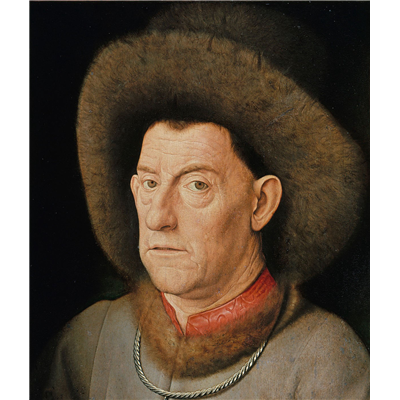 |
Jan van Eyck: God is in the Detail Jan van Eyck worked in Flanders, part of modern-day Belgium, at a time of great artistic advances called the Northern Renaissance. Inspired by local Gothic traditions and illuminated manuscripts his paintings are filled by the most delightful details. Join Mariska for this journey looking at some of the most wonderful works by Jan van Eyck and his extraordinary eye for life’s details. Mariska will be zooming in on details impossible to see with the naked eye; looking at references in his work to contemporary life in Flanders; noting his encyclopedic depiction of flora and fauna, and his scientifically accurate depiction of the lunar surface! She will discuss his ground breaking innovations and his influence on future artists. We will also be discussing the Exhibition at the National Gallery in London: 'Van Eyck: The Portraits' (21 November 2026 – 11 April 2027) Mariska Beekenkamp-Wladimiroff Mariska combines an interdisciplinary academic background with international entrepreneurial success in the arts and education sector. She holds a Master’s Degree in Social Psychology from the University of Amsterdam and an MA in Art History from the Courtauld Institute of Art. Mariska founded and lead two companies across two countries, building an international platform in arts education and cultural programming. Through Art Historical London, Art and Culture Key, and her broader international initiatives, she has delivered lectures, museum programmes, cultural tours, educational travel, online courses, and bespoke events for audiences across Europe, North America, Australia, and New Zealand. Mariska is fully PTLLS accredited in the UK. She is a visiting lecturer for the London Art History Society, the Royal Academy, Orleans House Gallery, The Law Society Art Group, the Anglo-Dutch Society, the Timken Museum of Art, The Hurlingham Club, and 92NY, among many others |
|
| Tuesday, 23 March 2027 |
| Banksy: Fraud or Genius? |
| Pepe Martinez |
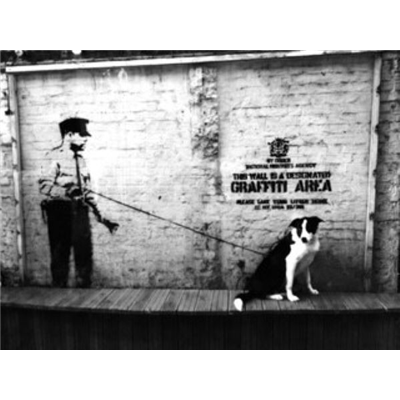 |
Banksy – Fraud or Genius? The lecture will trace the story of Banksy’s humble beginnings as a tagger on the streets of Bristol in the 1980’s to one of the most recognisable names in the art world. We will examine the reasons behind his incredible rise, looking at some of his famous stunts and discuss what his influence has been on the art market today and look at what his legacy, if any, might be. Pepe Martinez I qualified as a London blue badge tourist guide in 2011, graduating at the top of my class. Since qualifying as a guide I have specialised in the graffiti and street art of East London. Prior to becoming a London blue badge, I was a tour manager for 15 years, travelling extensively, all over the world. I can organise and arrange lecture facilities in central London. I can also combine a lecture with a walk of street art and graffiti in the East End and I can also organise a practical spray session, giving your group an opportunity to have a go at creating their own works. |
|
| Tuesday, 27 April 2027 |
| Thomas Heatherwick - a new Leonardo? |
| Ian Swankie |
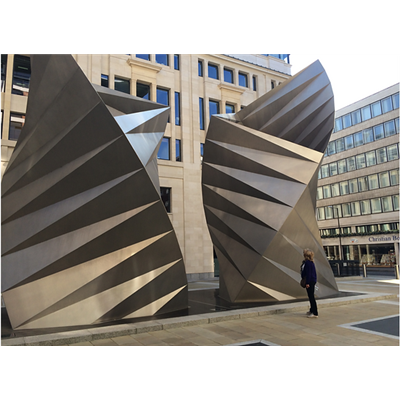 |
Thomas Heatherwick – a new Leonardo? The past decade has seen the meteoric rise of this extraordinarily versatile British designer with his acclaimed Olympic cauldron, the iconic new London bus and designs for a spectacular new HQ building in King's Cross for Google. Over the last thirty years the Heatherwick Studio has used an intriguing combination of curiosity and experimentation to produce a vast range of solutions to design challenges around the world. This talk looks at the problems presented, and the wonderfully creative ways in which Heatherwick and his team have responded. Ian Swankie A Londoner with a contagious enthusiasm for art and architecture, Ian is an official guide at Tate Modern, Tate Britain, Guildhall Art Gallery and St Paul’s Cathedral. He is also a freelance London tour guide. Since 2012 he has led a popular weekly independent art lecture group in his home town of Richmond in West London. He is an Accredited Lecturer of The Arts Society and a Liveryman of the Worshipful Company of Art Scholars, one of the City livery companies. |
|
| Tuesday, 18 May 2027 |
| Puccini - From Opera to Popular |
| John Snelson |
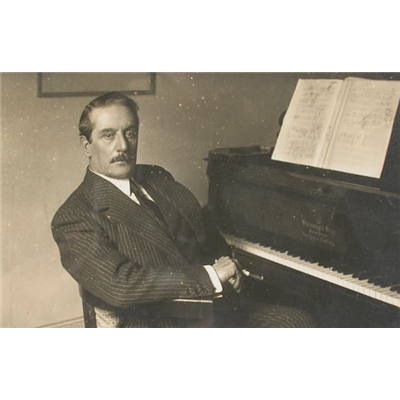 |
Puccini – From Opera to Popular The music of Puccini is instantly recognizable, even to those who don’t know his name or anything about opera. How has this happened? This lecture traces how Puccini’s music has spread from the opera house into global culture. The technology of record and film has played a part – from Enrico Caruso to Deanna Durbin to James Bond – as too have game shows and advertising. The sound of Puccini and what it conveys has also changed via high notes, romance, New York and penguins. John Snelson John Snelson has been fascinated by musicals all his life and is a leading expert in British musical theatre (the subject of his PhD). His publications include Reviewing the Situation: The British Musical from Noël Coward to Lionel Bart (Bloomsbury), How to Enjoy Opera (Oberon/Bloomsbury), Andrew Lloyd Webber (Yale University Press) and chapters in many authoritative reference works. He is especially known for exploring musicals – British and American – in the light of not just the music and the stage, but society and culture to reveal what makes them so appealing, enduring and important. He is well known as a writer and speaker on all aspects of the lyric stage – musicals, opera, ballet – and has written many programme articles for leading companies in the UK and abroad. John has given talks for, among others, the Royal Opera House, English National Opera, the Garsington and Glyndebourne festivals and for BBC radio. For twenty years he worked for the Royal Opera House. He currently lectures at Goldsmiths, University of London. |
|
| Tuesday, 22 June 2027 |
| Palmyra, Bride of the Desert |
| Paul Roberts |
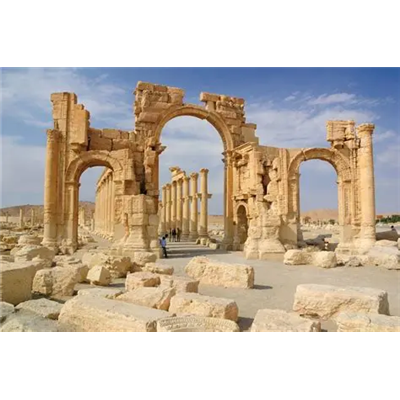 |
Palmyra, Bride of the Desert In this talk we look at one of the most beautiful cities of the ancient world, the fabled city of Palmyra, in the Syrian desert. Palmyra arose on a trade route that brought silk, spices and other luxuries across the desert from the east. Her wealth and power are displayed in gorgeous monuments, while her people, wealthy, sophisticated and cosmopolitan, are preserved in their hauntingly beautiful funeral portraits. Palmyra became so powerful during the Roman empire that its warrior queen Zenobia challenged Rome itself. We’ll see Palmyra’s meteoric rise and its dramatic fall, its rediscovery by English lords, its influence on art and architecture, and then its desecration by Isis. But we finish with the hope that beautiful Palmyra will rise again… Dr Paul Roberts Dr Paul Roberts OBE is Research Keeper in the Department of Antiquities at the Ashmolean Museum of Art and Archaeology, Oxford University. Paul has been a lecturer with the Arts Society for over twenty years. He studied Classics at the University of Cambridge, and Classical Archaeology at the Universities of Sheffield and Oxford. He then lived in Italy for several years, teaching and researching. He has travelled throughout the former lands of the Roman Empire, from Britain to Syria, and has excavated in Britain, Greece, Libya, Turkey and in particular Italy, where he is currently working on a Roman Villa in the Molise region of the Central Apennines. From 1994 to 2015 he was Senior Roman Curator in the Greek and Roman Department at the British Museum, where he curated the exhibition Life and Death in Pompeii and Herculaneum (2013). Arriving in the Ashmolean Museum, Oxford in 2015, in 2019/20 he curated Last Supper in Pompeii, a tribute to the Roman love affair with food and wine. He was awarded an OBE in the New Year Honours List 2025 for services to Archaeology and Heritage. |
|
| Tuesday, 28 September 2027 |
| William Blake: Poet, Painter, Prophet and much misunderstood |
| Raymond Warburton |
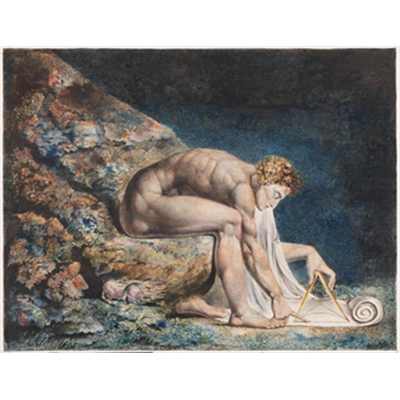 |
William Blake: poet, painter, prophet and much misunderstood William Blake had visions, talked to his dead brother, and invented a mythology that few could understand. Yet for all that he was a deeply human person, with attributes and flaws, and living in lowly circumstances and fighting authority much of the time. He was political, and sided with the revolutions in both France and America. Moreover, this radical man would be bemused by his poem ‘And did those feet’ being sung as a kind of national anthem today. He believed that heaven was overrated and the word of God too often presented as law-giving dogma; while hell was a place free from rules and where emotions and personalities could be expressed. His major paintings, his prints and his poems will all be covered in the lecture, and will be related to his personal and political beliefs. There will be tender loving pieces as well as prophetic and apocalyptic works. There will be a special focus on, and readings from, his Songs of Innocence and Experience, including The Tyger. Discover the truth about William Blake, and really get to know him and his art, in this lecture. Raymond Warburton Ray has had a life-long love of art. However, in his twenties, Ray studied social sciences at the London School of Economics and the School of Oriental and African Studies. These studies led to a career in health and social care, with art being an evening and weekend passion. But all that changed in 2011, when Ray became a guide at Tate Britain and Tate Modern. Then from 2014 to 2017, he studied art history at the Open University, and then at the University of Buckingham, from where he gained an MA in the History of Art. Ray became an Arts Society lecturer in 2017 and knows what it’s like to be on the receiving end of lectures, as he is a member of his local Arts Society in Blackheath. |
|
| Tuesday, 26 October 2027 |
| Tinker, Tailor, Artist, Spy - Sir Peter Paul Rubens as a Diplomat and Agent |
| Matthew Wilson |
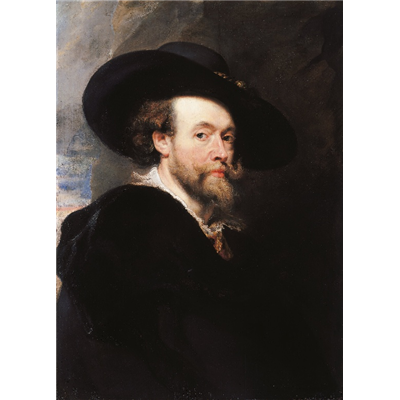 |
Tinker, Tailor, Artist, Spy – Sir Peter Paul Rubens as a Diplomat and Agent Few gallery-goers are aware that Rubens was not only the most influential artist of his period, but also a high-ranking diplomat and informal spy. During his glamorous and prestigious career, Rubens travelled throughout Europe and was esteemed by the mightiest kings and queens of the age. He was intelligent, good-looking and could speak several languages. His career as an artist was an excellent cover for international travel and private meetings. So, acting on behalf of the Governors of the Spanish Netherlands, Rubens had covert summits with Europe’s most significant power brokers like Marie de’Medici of France, King Philip IV of Spain, and King Charles I of England. His aim was bringing peace to his native Flanders and to Europe as a whole during the Thirty Years War. Rubens is unique in the history of art as a painter who not only depicted the great events of his age but helped to shape them. Once you know about Ruben’s little-known career as a diplomat and spy, you will never look at his art the same way. Matthew Wilson Secret symbols, Nazi-fighting, cultural love affairs, the ‘nude’, snowmen, and artistic espionage are among the diverse interests of art historian Matthew Wilson. Matthew studied History of Art at the Courtauld Institute and is an author, lecturer, and educator. As a freelance journalist he writes for numerous publications including BBC Culture, The Spectator, The Economist and Aesthetica Magazine. He has written two books on symbolism – ‘Symbols in Art’ (Thames & Hudson, 2020) and ‘The Hidden Language of Symbols’ (Thames & Hudson 2022) and his latest book is 'Art Unpacked' - a fully illustrated introduction to understanding art (Thames & Hudson 2023). |
|
| Tuesday, 23 November 2027 |
| Ludwig von Beethoven - Classical Music’s Great Revolutionary |
| Sandy Burnett |
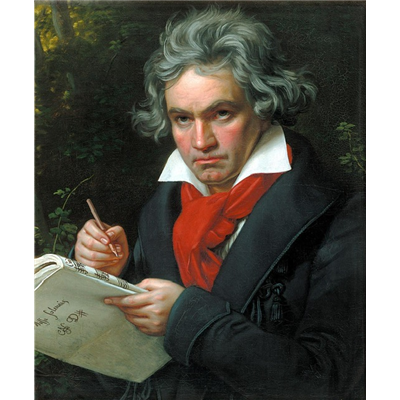 |
Ludwig von Beethoven – Classical Music’s Great Revolutionary The 200th anniversary of Ludwig van Beethoven's death in March 1827 makes it a great time to reassess the legacy of this great composer. Born into a family of court musicians in Bonn, Beethoven became one of the greatest and most disruptive figures in the history of classical music; by the time he died in Vienna he had completely transformed music's cultural landscape. This lecture reflects on this brilliant, cantankerous, visionary and astonishingly original composer, and traces how he grew from Classical beginnings to become a true Romantic artist, or as he preferred to describe himself, a “poet in sound.” Sandy Burnett Sandy is one of the UK’s most versatile music commentators, enjoying a career that combines broadcasting, performing and lecturing. After studying at St Catharine’s College, Cambridge and working as music director for the RSC, National Theatre and in London’s West End, Sandy Burnett spent a decade as one of the presenters on BBC Radio 3. He leads cultural holidays all over the world taking music lovers to diverse venues. He conducts the Chiswick Chamber Orchestra and is a first-call double bass player on the London jazz scene. He runs an online classical music appreciation Listening Club, and is the author of the Idler Guide to Classical Music. |
|
| Tuesday, 07 December 2027 |
| The Roaring Twenties - Art, Design and High Society |
| Jo Banham |
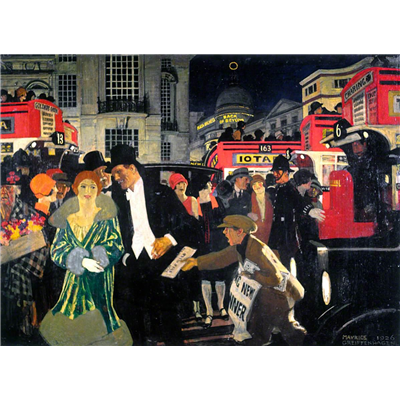 |
The Roaring Twenties – Art, Design and High Society Following the dark days of the Great War, The Roaring Twenties spawned a generation of wealthy and privileged Bright Young Things who were determined to shock, who broke with the conventions of the past to pursue a life of hedonism and promiscuity fuelled by champagne, cocaine, parties and jazz. Women wore fur coats and cloche hats, donned new boyish fashions and had short, cropped hair. Men drove fast cars, mixed cocktails and smoked American cigarettes. Society ate in new restaurants like The Trocadero, danced the Charleston in ballrooms like the Savoy, and drank in clubs like the Embassy and the Café de Paris. Valentino, Tallulah Bankhead, and Noel Coward emerged as major celebrities. Fashionable society was immortalised by portraitists like John Lavery and Cecil Beaton who brilliantly captured the glamour of the age. Leisure, pleasure and the excitement of jazz were portrayed in paintings by Burra and Roberts. Furniture and decoration showed the influence of Cubism, Vorticism and other styles associated with the avant-garde, while the discovery of Tutankhamun’s Tomb ushered in an obsession with all things Egyptian and Oriental. This lecture aims to conjure up the energy and originality of the decade and to explore the lives of its leading figures and examples of its most innovative art and design. Joanna Banham From 2006-2016 Jo was Head of Adult Learning at the Victoria & Albert Museum, and previously Head of Learning and Access at the National Portrait Gallery, and Head of Public Programmes at Tate Britain. She has been Curator of Leighton House and Assistant Keeper at the Whitworth Art Gallery. She curated an exhibition on William Morris and the Arts and Crafts Movement for the Juan March Fundacion in Madrid and the Museu Nacional d’Art Catalunya in Barcelona and she is currently writing a book on the History of Wallpaper. She is also Director of the Victorian Society Summer School and a freelance curator and writer. |
|